In the Galápagos Islands, ocean currents rather than seasons determine what you will see. The cold Humboldt and warm Panama currents create two distinct weather periods that each bring different wildlife spectacles.
Charles Darwin arrived at the Galápagos in September 1835 during the cool, dry season, when the islands look more like a moonscape than a tropical paradise. Had he arrived in March, during the warm, wet season, he would have found lush green vegetation and warm seas. The Galápagos are not one destination but two, alternating between dramatically different conditions driven not by the tilt of the Earth but by the behavior of ocean currents that have shaped the archipelago's extraordinary wildlife over millions of years.
Two Currents, Two Seasons
The Galápagos sit at the confluence of several major ocean currents. The Humboldt Current carries cold, nutrient-rich water north from Antarctica along the South American coast, then westward to the islands. The Panama Current brings warm water south from Central America. The Cromwell Current, a deep subsea flow, rises against the western islands of Isabela and Fernandina, bringing cold, nutrient-laden water to the surface in a process called upwelling.
Two Currents, Two Seasons
From June through November, the Humboldt dominates. Sea temperatures drop to 18-22°C, garúa (a misty drizzle) covers the highlands, and nutrient-rich waters support explosive plankton growth that feeds the entire food chain. From December through May, the Panama Current pushes the Humboldt aside. Seas warm to 25-28°C, tropical rains green the lowlands, and the underwater world transforms as warm-water species replace cold-water ones.
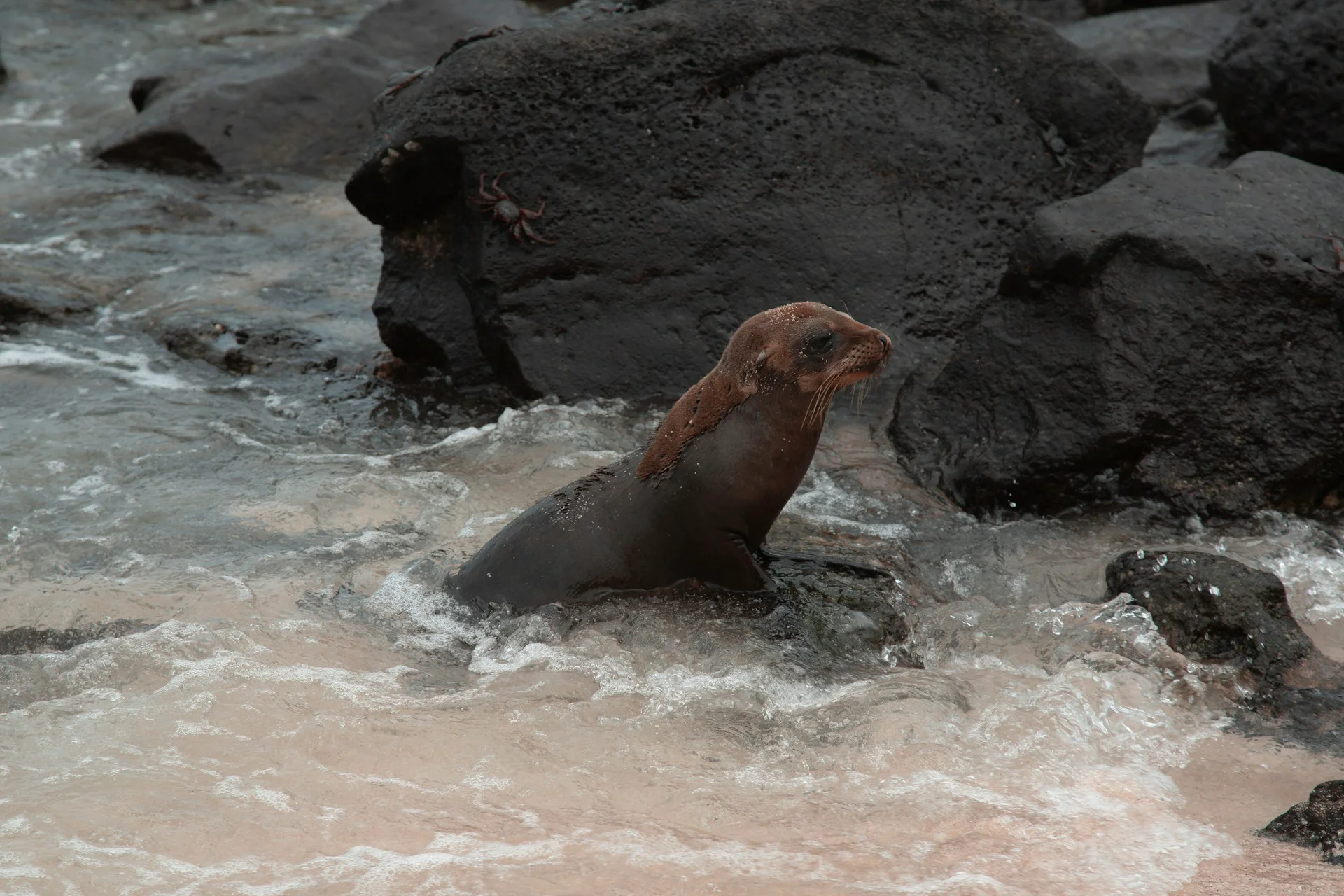
During El Niño events, warm equatorial waters overwhelm the Humboldt entirely. Sea temperatures can spike above 30°C for months, plankton production collapses, and the food chain unravels from the bottom up. Marine iguanas shrink in body length, penguin populations can decline by over fifty percent, and fur seal pups starve. La Niña brings the opposite extreme: the Humboldt strengthens, waters turn unusually cold and nutrient-dense, and marine life thrives. These oscillations remind visitors that the Galápagos are governed not by calendars but by the Pacific Ocean's deep circulation patterns.
Month-by-Month Wildlife Calendar
Each month in the Galápagos offers a distinct combination of wildlife activity, water conditions, and weather. The table below summarizes what to expect throughout the year.
Month
Sea Temp
Highlights
Diving/Snorkeling
January
24-26°C
Green sea turtle nesting, marine iguana nesting begins
Warm, good visibility
February
25-28°C
Warmest seas, flamingo nesting on Isabela
Warmest water, easiest snorkeling
March
25-27°C
Marine iguana eggs hatching, waved albatross arrive on Española
Whale sharks arrive at Darwin and Wolf, sea lion pups swimming
Whale shark diving season begins
December
23-25°C
Giant tortoise breeding season, land iguanas nesting
Warming water, improving visibility
Wildlife Shaped by Currents
The Galápagos penguin, the only penguin found north of the equator, exists here solely because the Humboldt Current brings Antarctic-temperature water to the tropics. These small penguins breed when the cold current is strongest, from August through October, relying on the nutrient-rich waters to provide the sardines and mullet they need to raise chicks. They concentrate around the western islands of Isabela and Fernandina, where the Cromwell upwelling creates the coldest, most productive waters. In El Niño years, when warm currents overwhelm the Humboldt, penguin populations crash dramatically, a stark reminder of how tightly life here is linked to ocean temperature.
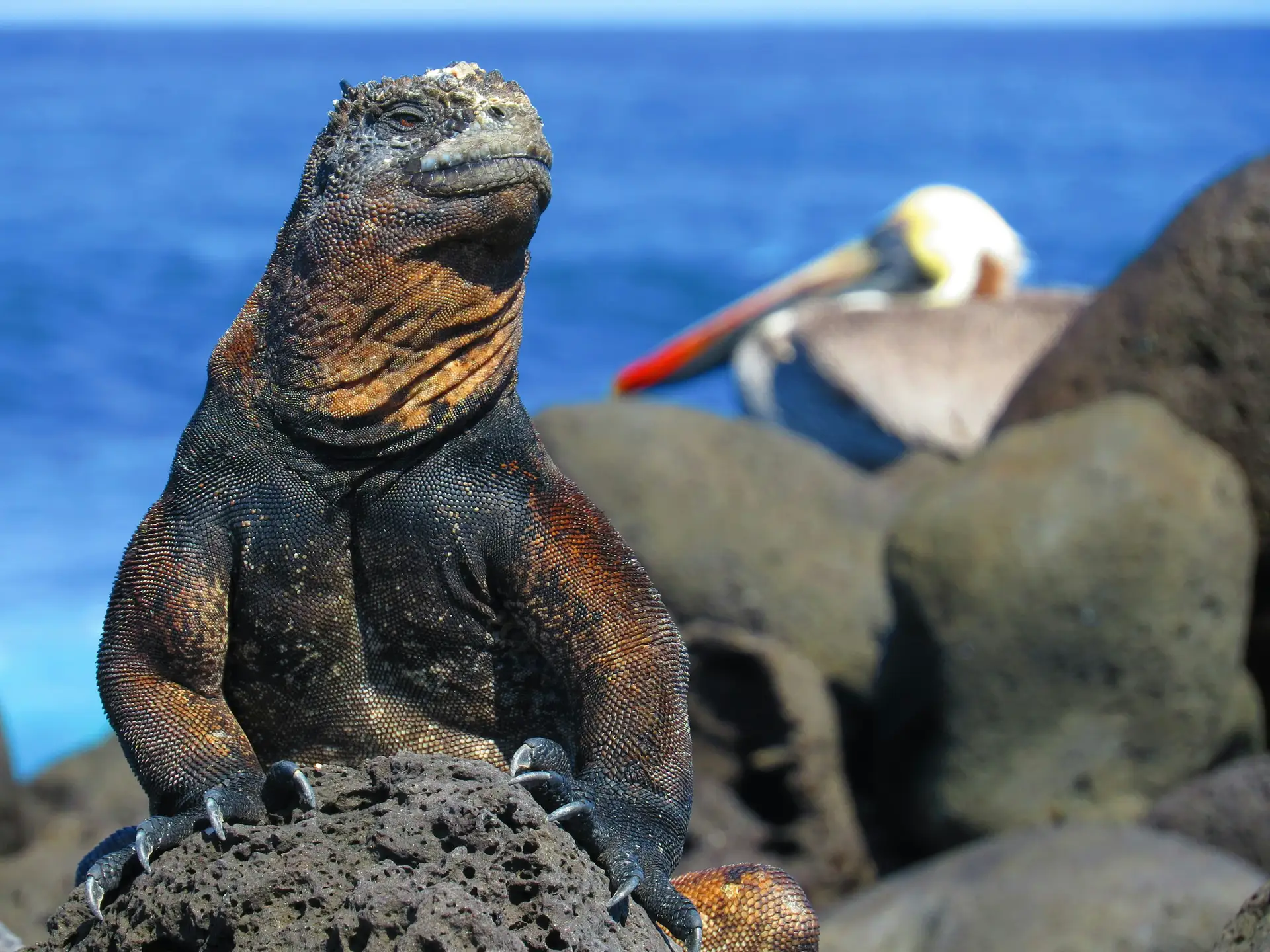
Marine iguanas, found nowhere else on Earth, dive into the cold waters to graze on algae. Their behavior changes with the seasons: during the cold period, they must warm themselves on rocks between feeding dives, creating the iconic image of hundreds of iguanas spread across lava rocks absorbing the equatorial sun. During the warm season from December through May, water temperatures allow longer feeding dives, and the males develop vivid breeding colors of red and green, particularly striking on Española Island. Females lay eggs in sandy burrows from January through April, and hatchlings emerge roughly three months later, running a gauntlet of racer snakes and hawks.
Whale sharks, the largest fish in the ocean, visit the northern islands of Darwin and Wolf between November and May. These gentle giants follow warm currents south and are drawn by the nutrient mixing at the boundary between warm and cold water masses. Pregnant females dominate the sightings, leading scientists to believe the deep waters north of the archipelago may serve as a birthing ground. Diving with whale sharks at Darwin's Arch is considered one of the world's top ten dive experiences.
Snorkeling and Diving by Season
The Galápagos offer world-class underwater encounters year-round, but conditions vary dramatically between seasons. During the cool season from June through November, water temperatures drop to 18-22°C, requiring a full wetsuit of five to seven millimeters. Visibility decreases to around ten to fifteen meters due to plankton-rich water, but this is precisely what attracts the megafauna. Hammerhead sharks school in the hundreds at Darwin and Wolf, manta rays cruise through cleaning stations, and marine iguanas graze on algae-covered rocks in surreal underwater scenes.
Snorkeling and Diving by Season
The warm season from December through May brings water temperatures of 24-28°C and visibility that can exceed twenty meters. Snorkeling is far more comfortable, and encounters with sea turtles, playful sea lion pups, and reef fish are at their best. Eagle rays, golden rays, and reef sharks replace the cold-water species. For non-divers, this is the ideal season to explore the underwater world with just a mask and snorkel. The calmest seas occur in February and March, making these months particularly suited for families and those prone to seasickness.
Giant Tortoise Breeding and Migration
The giant tortoises that gave the Galápagos their name follow an annual cycle tied to rainfall. During the cool, dry season from June through November, tortoises in the highlands graze on grasses kept green by garúa mist. As the warm rains begin in December, males become territorial and the deep booming sounds of mating carry across the volcanic slopes. Females descend to the lower, warmer elevations between June and September to lay eggs in nests dug into sun-baked sandy soil, where the warmth incubates the clutch over four to eight months. Hatchlings emerge during the wet season, when food is abundant and the ground soft enough to dig free from the nest.
The Charles Darwin Research Station on Santa Cruz Island operates breeding programs for several tortoise species, and visitors can see hatchlings and juveniles at every stage. The highlands of Santa Cruz also offer the best wild tortoise encounters, where these ancient creatures roam freely through private ranches and reserves.
Planning Your Visit
Most visitors experience the islands aboard small expedition ships that navigate between islands overnight, maximizing time for wildlife encounters. National Park rules strictly limit visitor numbers at each site, and all visitors must be accompanied by a certified naturalist guide. The cool season from June through November offers the best diving, the most active seabird colonies, and peak penguin and sea lion activity, though seas are rougher and the garúa creates overcast skies. The warm season from December through May provides calmer seas, warmer water for swimming, lush green landscapes, and the best conditions for snorkeling and photography.
The transition months of June and December often combine advantages of both seasons. Booking six to twelve months in advance is essential for liveaboard vessels, as berths on the best ships sell out quickly.
Monitor ocean conditions and seasonal transitions on the Hyperion Map to choose the perfect time for your Galápagos journey.